

Exxon Mobil has cautioned that any return to Venezuela’s oil sector will depend on major legal reforms and a detailed technical assessment of the country’s assets.
Exxon’s Chairman and Chief Executive Officer, Darren Wood, has stressed that the country remains “uninvestable” under its current framework despite its vast resource potential.
Woods was at the time speaking at a White House meeting on January 9, chaired by US President Donald Trump, alongside top executives from Chevron and ConocoPhillips.
“We think it’s absolutely critical in the short term that we get a technical team in place to assess the current state of the industry and the assets to understand what would be involved to help the people of Venezuela get production back on the market,” Woods said. “With the invitation of the Venezuelan government and with appropriate security guarantees, we are ready to put a team on the ground there”.
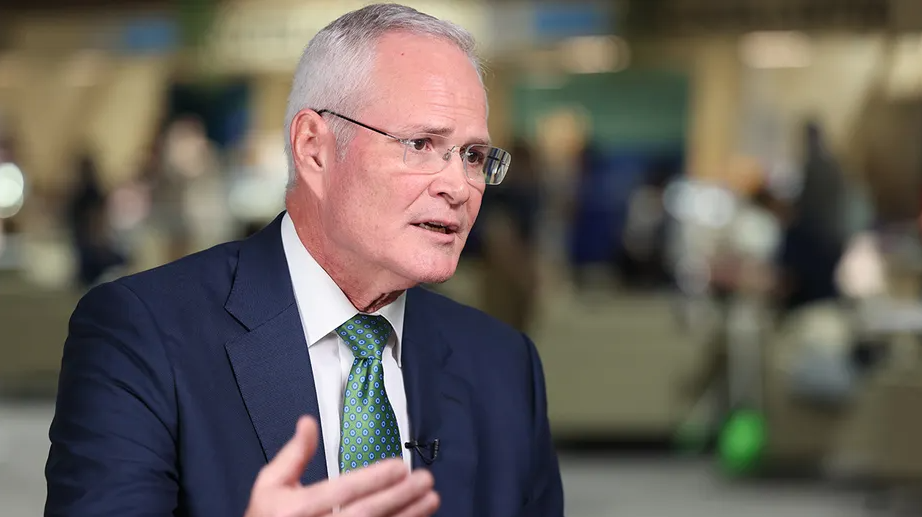
Woods said Exxon approaches investments with a long-term view, emphasizing that projects often span decades and must meet strict criteria. “It has to be a win for the company and our shareholders… a win for the government… and it has to be a win for the people,” he said. “Those three things ensure a stable, long-term platform for the large investments that we make.”
Exxon has a long and complicated history in Venezuela, having first entered the country in the 1940s.
The US oil giant exited the Spanish-speaking nation’s oil industry in the early 2000s, when the late President Hugo Chávez moved to reassert state control, nationalizing major oil projects and forcing foreign companies into minority joint ventures with the state-owned oil company, Petróleos de Venezuela S.A.(PDVSA).
While Exxon maintains that Venezuela’s oil industry is “uninvestable”, oil exploration activities in the wider Caribbean region continue to yield fruit, particularly in Guyana.
ExxonMobil holds a 45% interest in Guyana’s Stabroek Block. Hess holds 30%, while CNOOC holds 25%.
In contrast to the tens of billions of dollars ill-managed during its production period in Venezuela, Exxon has maintained profitable operations in Guyana, with daily oil production reaching a new milestone of 900,000 barrels per day, following the ramp-up of the Yellowtail project to full capacity.
Yellowtail, Guyana’s fourth offshore development, has achieved its designed production rate of 250,000 barrels of oil per day (b/d). This, combined with strong operational performance from Liza Phase 1, Liza Phase 2, and Payara, has propelled national output to this record level.
Exxon’s Yellowtail project averaged 258,000 b/d in November | OilNOW
Oil production is expected to triple in the coming years, specifically from Guyana’s Uaru field,which is expected to rise steadily after start-up, strengthening offshore supply over the medium term.
Uaru output projected to reach 215,000 b/d by 2027 – S&P Global | OILNOW
The US$12.7 billion development targets more than 800 million barrels of recoverable oil. It will comprise up to 10 drill centers and 44 wells and is designed to reach peak production of 250,000 barrels per day.