


Darren Budhram entered Guyana’s offshore oil industry with more questions than answers. The petroleum engineering graduate joined ExxonMobil Guyana’s Subsea team directly after university. During his first year, he helped support the control systems used to operate equipment thousands of feet below the Atlantic Ocean.
Budhram chose the industry because he believed it could support Guyana’s development and create opportunities for its people. His transition began with unfamiliar terms, complex technology, and a demanding learning process.
“Moving directly from the classroom into the workplace came with a steep learning curve but the transition was much smoother than I initially expected, and I credit that largely to ExxonMobil Guyana’s culture,” he said. Budhram experienced some uncertainty as he adjusted to the workplace.
“At first, I experienced a degree of imposter syndrome as I was exposed to countless new acronyms, technical terms, and concepts unfamiliar to me,” he said. “Thankfully, I was surrounded by a team that fostered a culture where asking questions was encouraged.”
That environment allowed him to seek clarification and develop confidence as a new engineer. Guyana’s offshore developments rely on subsea infrastructure to connect wells to manifolds. The infrastructure also routes production to floating production, storage, and offloading vessels. Subsea control systems supply the electrical and hydraulic power needed to operate equipment on the seabed. They also provide communication and monitoring capabilities.
“Think of it as the body’s nervous system,” Budhram said. As a Subsea Controls Engineer, he helps maintain the reliability, integrity, and performance of those systems throughout the life of an offshore field. His daily work includes supporting offshore operations and assisting with the commissioning of new wells. He also monitors system performance and helps troubleshoot control-related problems. The role requires close coordination with offshore personnel, equipment vendors, and teams from several technical disciplines.
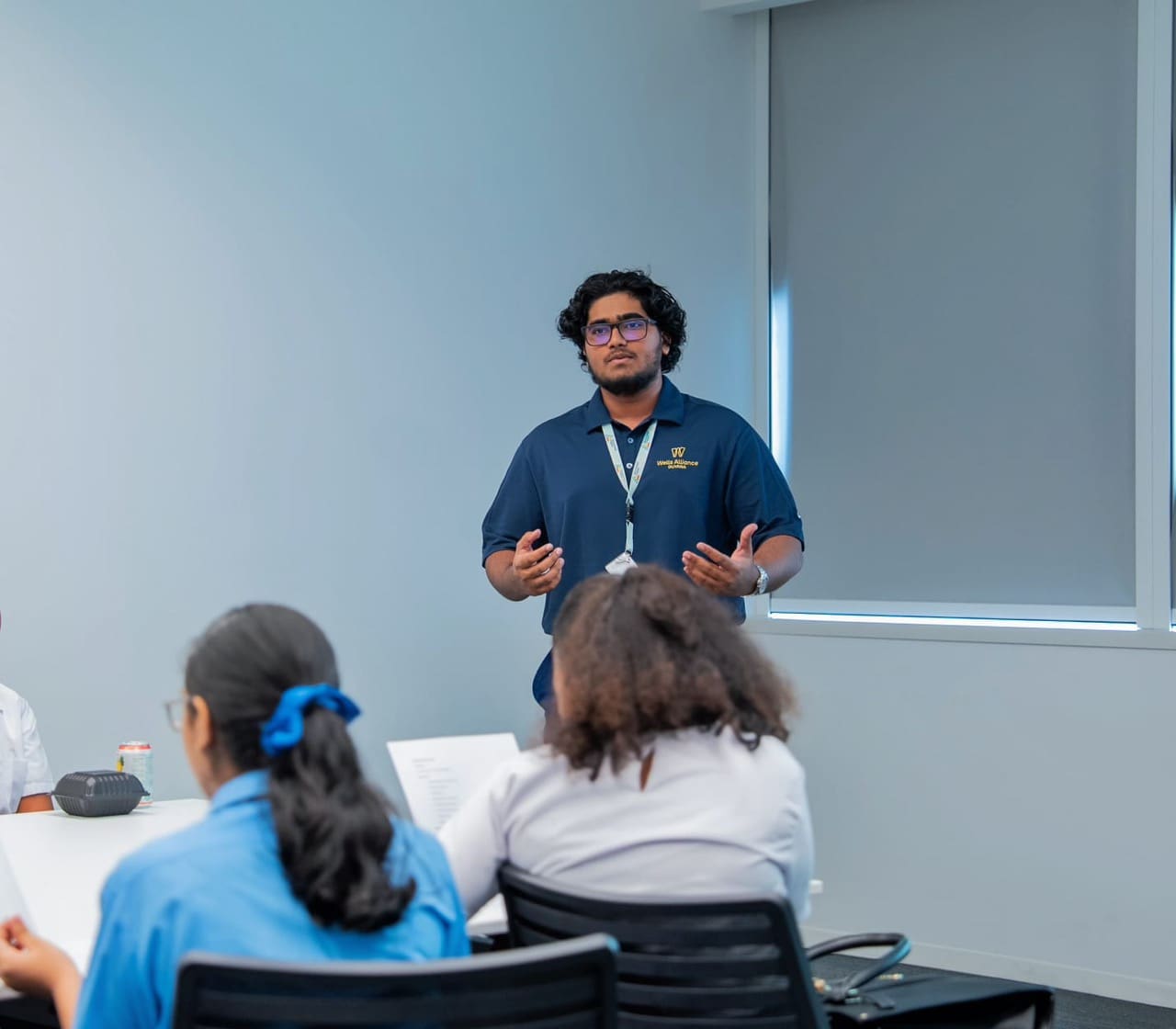
“What has really stood out to me is the level of visibility and control we have over these subsea assets located thousands of feet beneath the ocean surface,” Budhram said. Operators can remotely actuate valves and check the condition of subsea equipment. They can also receive live data from pressure and temperature sensors.
“Before entering the industry, it was something I rarely thought about, but it continues to fascinate me that operators can remotely actuate valves, monitor equipment status, and continuously receive real-time data from subsea pressure and temperature sensors,” he said.
Budhram’s first offshore assignment took him aboard a multipurpose support vessel. The vessel was supporting the installation of subsea Christmas trees, jumpers, and hydraulic and electrical flying leads. The work helped prepare subsea systems for upcoming projects while supporting assets already in operation.
“What stood out the most to me was the sheer scale of the operations executed in Guyana,” Budhram said. That impression grew through discussions with experienced industry professionals. He said many described Guyana’s level of offshore activity as exceptional compared with their previous assignments.
One of Budhram’s main challenges was absorbing the volume of information associated with subsea operations. At the same time, he wanted to make a useful contribution as a new engineer. Mentorship played an important role in his development. His team lead brought extensive international subsea experience. A Guyanese colleague with 10 years of oil and gas experience also helped him understand the work.
“Their willingness to share knowledge, provide guidance, and connect technical concepts to real-world operations accelerated my learning and helped build both my competence and confidence over the last year,” Budhram said.
His work also strengthened his understanding of safety. Subsea operations require precision because decisions can affect personnel, equipment, and production. “Here, safety is a core value that guides every decision and activity,” he said.
Budhram regularly collaborates with colleagues and subject matter experts from other countries. He said those interactions demonstrated the value of drawing on the experience of a wider team.
“I’ve learned that while it’s impossible to know everything, I can create value by asking the right questions, engaging the right people, and bringing different perspectives together to solve problems,” he said.
His first year also developed his contextual thinking, as he explained “I’ve learned to look beyond the immediate task and better understand how individual decisions can affect the wider operation.”
Budhram plans to expand his technical expertise and assume greater responsibilities within the oil and gas industry. He advised students interested in engineering and offshore operations to develop a strong technical foundation. He also encouraged them to pursue internships and other opportunities for practical experience.
Industry conferences, forums, and expos can help students meet professionals and learn about available career paths. Organizations such as the Society of Petroleum Engineers can also provide networking, mentorship, and industry knowledge.
“The more exposure you gain, the better prepared you’ll be when opportunities arise,” Budhram said.