

Here are the stories that you, the readers, were most interested in last year about Suriname:
TotalEnergies and Staatsolie reported that GranMorgu reached 23% completion, covering engineering and procurement progress, and reaffirmed that Suriname’s first offshore oil project remains on track for a 2028 start-up. Staatsolie’s Managing Director Annand Jagesar said, “We’ve even been able to brag a little about the local companies, because compared to Guyana, the Surinamese companies are a step ahead. As a result, processes here are also faster.”
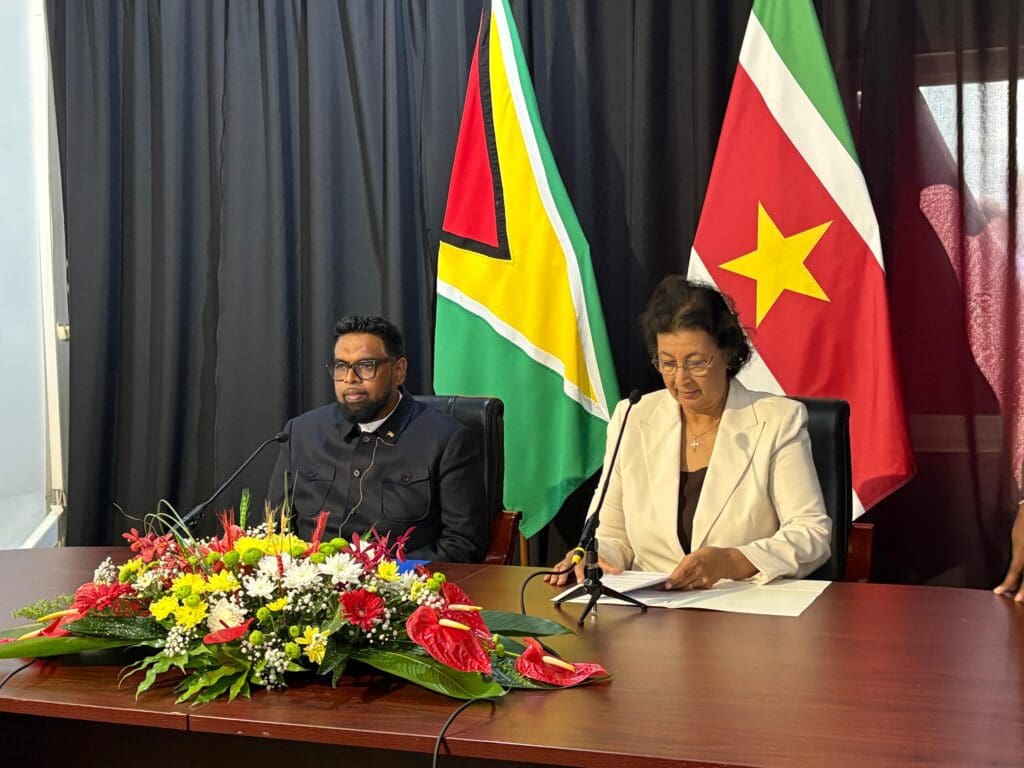
Presidents Jennifer Geerlings-Simons and Irfaan Ali reaffirmed cooperation in energy, trade and infrastructure, with both leaders prioritizing construction on the Corentyne River Bridge – a key project for boosting cross-border logistics and supporting future offshore development. Ali stated that cooperation is not limited to crude oil, stressing that natural gas, renewable energy, and regional grid interconnection are also central to the two countries’ long-term vision.
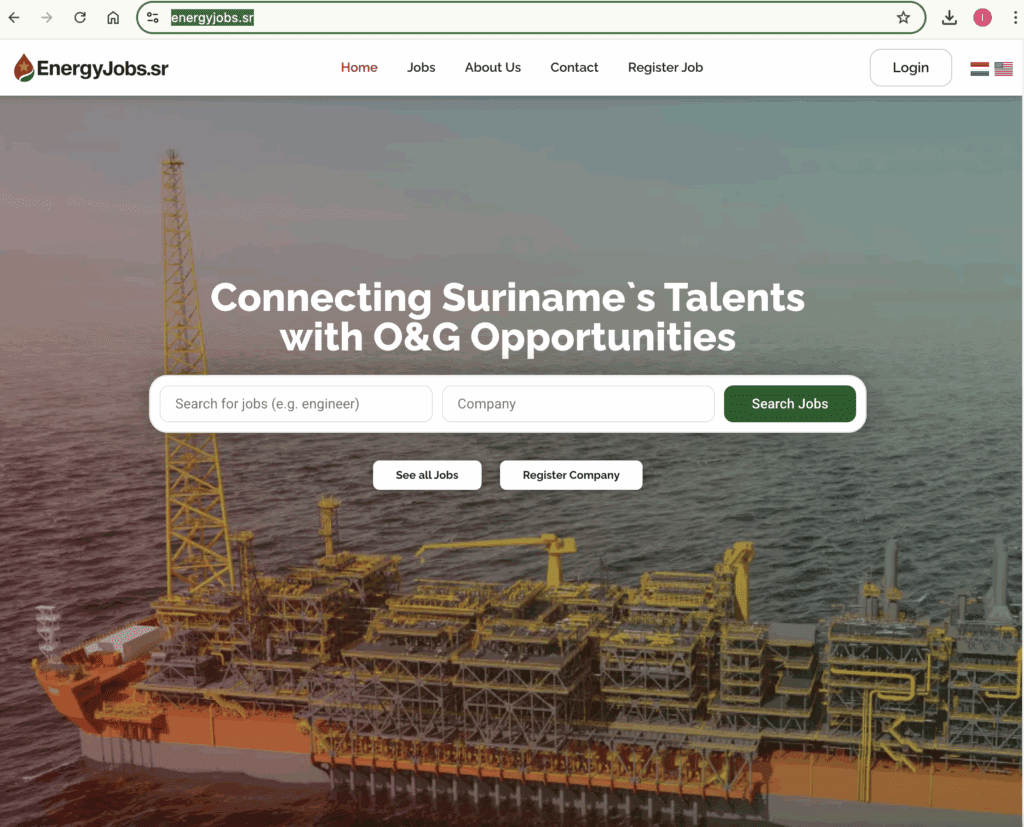
TotalEnergies introduced EnergyJobs.sr, a new platform designed to link Surinamese workers and businesses with opportunities emerging from the GranMorgu project, aiming to improve transparency and support long-term workforce development. The platform had already registered 437 positions -244 onshore and the rest offshore- with 142 vacancies open for applications as of launch day.
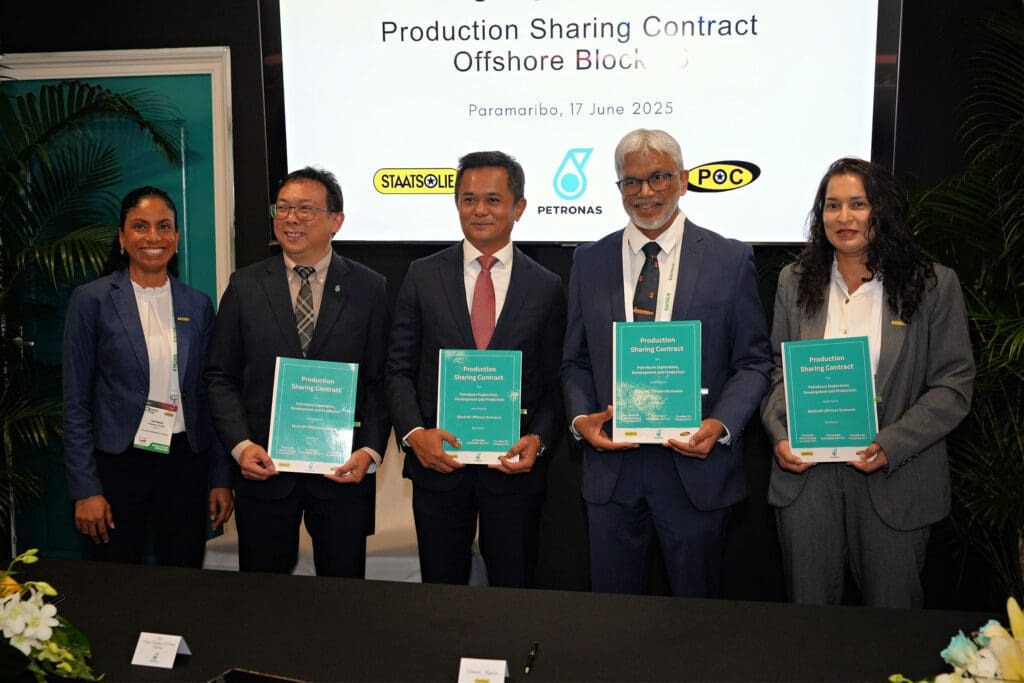
Suriname awarded PETRONAS operatorship of Block 66, expanding the company’s footprint in the basin and signaling continued international interest in the country’s deepwater prospects. PETRONAS holds 80% interest and is the operator of the block as Paradise Oil Company, Staatsolie’s subsidiary holds 20%.
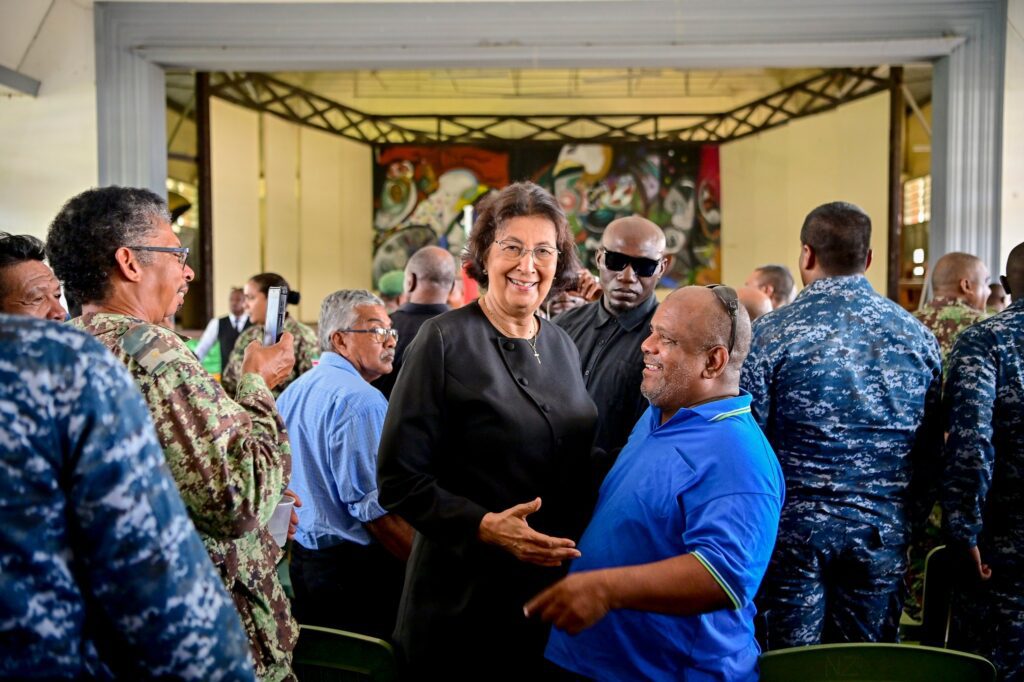
President Jennifer Geerlings-Simons reiterated the importance of a local content legislation, emphasizing that Surinamese citizens must see direct benefits as the country moves closer to first offshore oil production. Simons noted that the country will need skilled labor from abroad but stressed the importance of building local capacity.
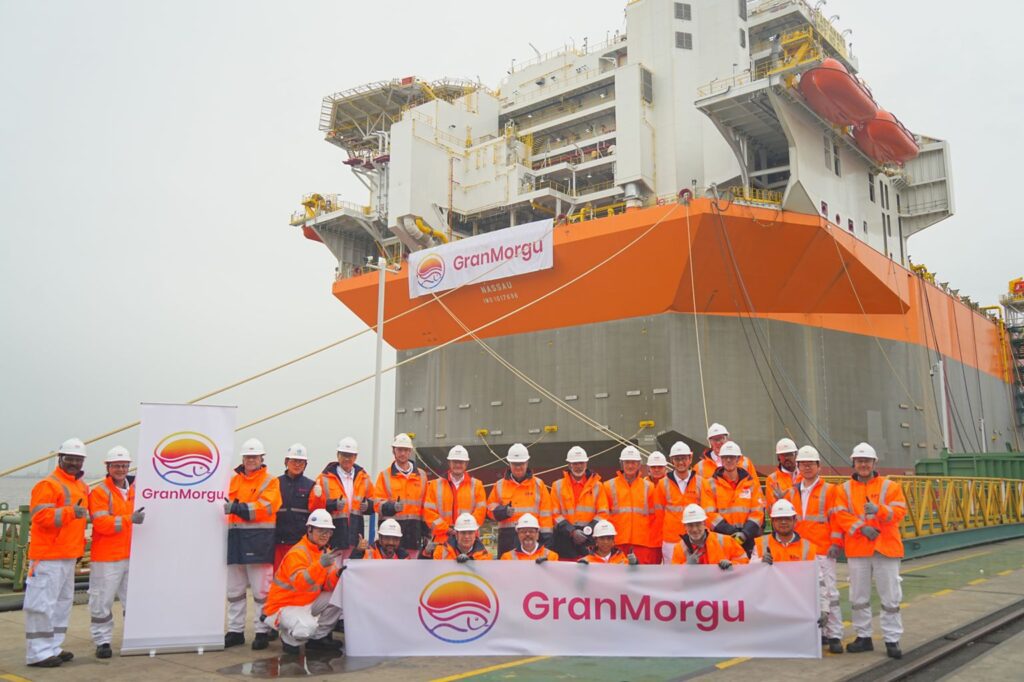
The US$10.5 billion investment in GranMorgu is projected to lift Suriname’s economy by generating substantial government revenue, increasing job opportunities, and strengthening the country’s long-term development outlook. By 2029, Staatsolie expects its annual revenues to more than triple, with offshore oil becoming the company’s primary income source. Capacity building is also underway. Staatsolie and its partners have increased investment in local training programs, internships and contractor development in anticipation of offshore operations ramping up.
In addition to the construction of the Suriname’s first FPSO (Floating Production Storage and Offloading), SBM Offshore secured the operations and maintenance contract for it as well, for a minimal period of two years after first oil with extension options, marking an important step as GranMorgu transitions from planning to operational readiness.
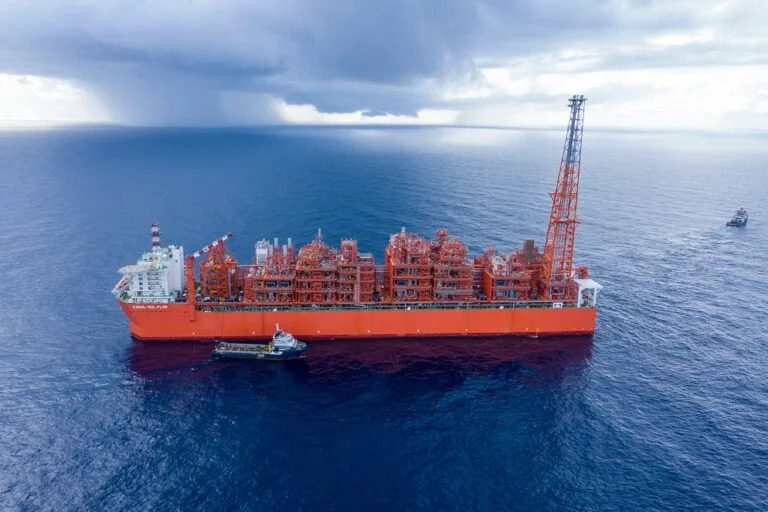
PETRONAS confirmed an FLNG (Floating Liquified Natural Gas) unit will develop the Sloanea gas field in offshore Block 52 – the first such facility in the region – allowing Suriname to export LNG directly from offshore operations by the end of the decade. The project lies about 120 kilometers off Suriname’s coast in the Guyana-Suriname Basin, in waters roughly 450 meters deep. The Sloanea discovery was first made in 2020 and later appraised by the Sloanea-2 well in 2024, which confirmed the reservoir’s lateral extent and recoverable gas volumes.
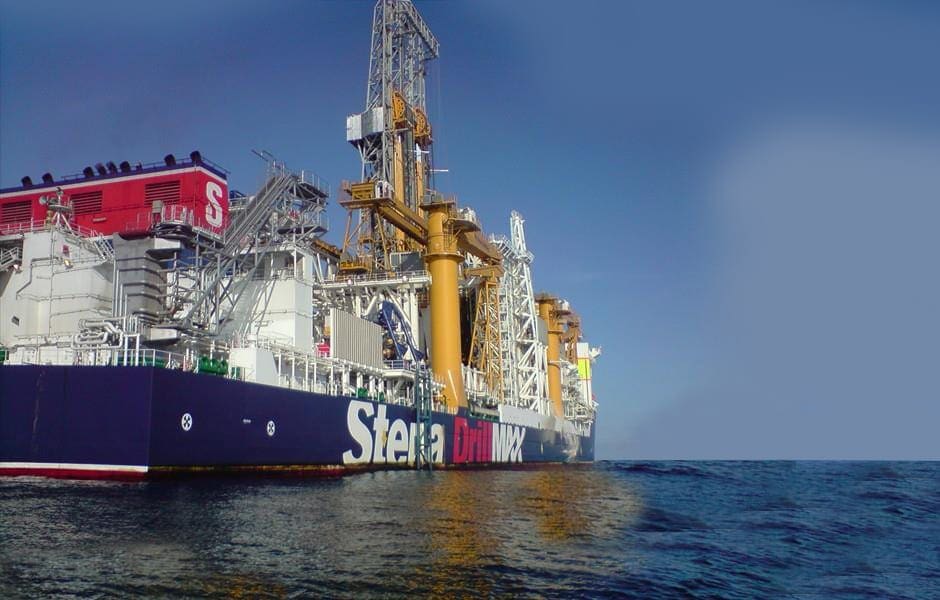
A Wood Mackenzie report indicated that Suriname will lead the basin in exploration drilling in 2025, with several high-potential wells planned by TotalEnergies, PETRONAS and Chevron.
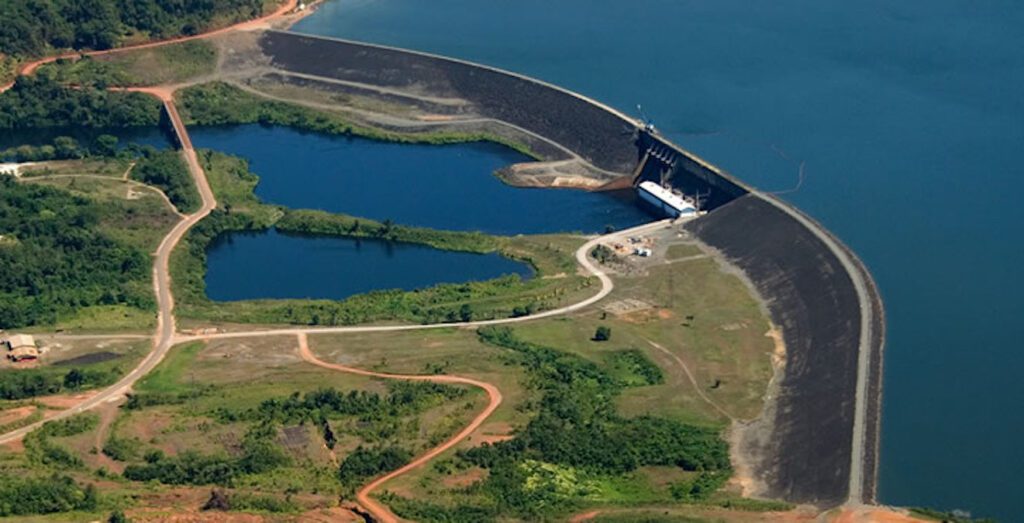
Suriname advanced efforts to broaden its renewable energy portfolio with new solar, hydropower and energy-security initiatives, signaling a parallel push for green growth alongside offshore oil development. Hydropower, anchored by the Afobaka Dam, currently accounts for about 48% of Suriname’s electricity. While hydropower provides a solid backbone, authorities recognize the need to diversify to ensure energy security and reduce reliance on heavy fuel oil-based generation.
Writer’s pick
This piece drew insights from a panel from the SEOGS and examined Suriname’s efforts to generate revenue from carbon credits while managing challenges around market verification, pricing, and long-term sustainability within the country’s vast forest landscape. Suriname being the most forested nation in the world has not yet gained earnings from carbon credits. Panelists, including former Staatsolie Director Rudolf Elias, underscored that without a unified national framework and credible measurement systems, Suriname risks leaving significant value on the table despite its exceptional natural advantage.
Editor’s Pick
Delana Isles: Staatsolie approves commercial field for Sloanea-1 gas discovery in Suriname’s Block 52
In late 2025, Suriname’s national oil company Staatsolie Maatschappij Suriname N.V. approved the commercial field designation for the Sloanea-1 gas discovery in Block 52 offshore, marking a key shift from exploration to development. The decision follows years of appraisal work with operator PETRONAS Suriname. It paves the way for a development plan and a possible Final Investment Decision (FID) in 2026, aiming for initial gas production by around 2030.
This achievement highlights the growing importance of natural gas, joining oil as a key player in Suriname’s developing offshore energy industry.