

Minister of Natural Resources Vickram Bharrat and a team from the Ministry visited Vreed-en-Hoop Shorebase Inc. on June 16, where ExxonMobil Guyana conducted a practical offshore oil spill response exercise near the Sea Buoy Anchorage.
The Ministry said representatives of ExxonMobil Guyana were also present, including company President Alistair Routledge.
The exercise involved the deployment and retrieval of oil spill response booms using two vessels. According to the Ministry, the activity provided practical training for response teams and demonstrated operational readiness in the event of an offshore oil spill.
The Ministry said the drill simulated the initial response actions that would be taken if a spill occurred. Crew members and emergency response personnel participated directly in the deployment, giving them hands-on experience with the equipment and procedures that would be used in an actual incident.
Fact Sheet: Guyana’s Capping Stack | OilNOW
The activity was coordinated with local authorities to ensure safety and minimize disruption to regular maritime operations, the Ministry said.
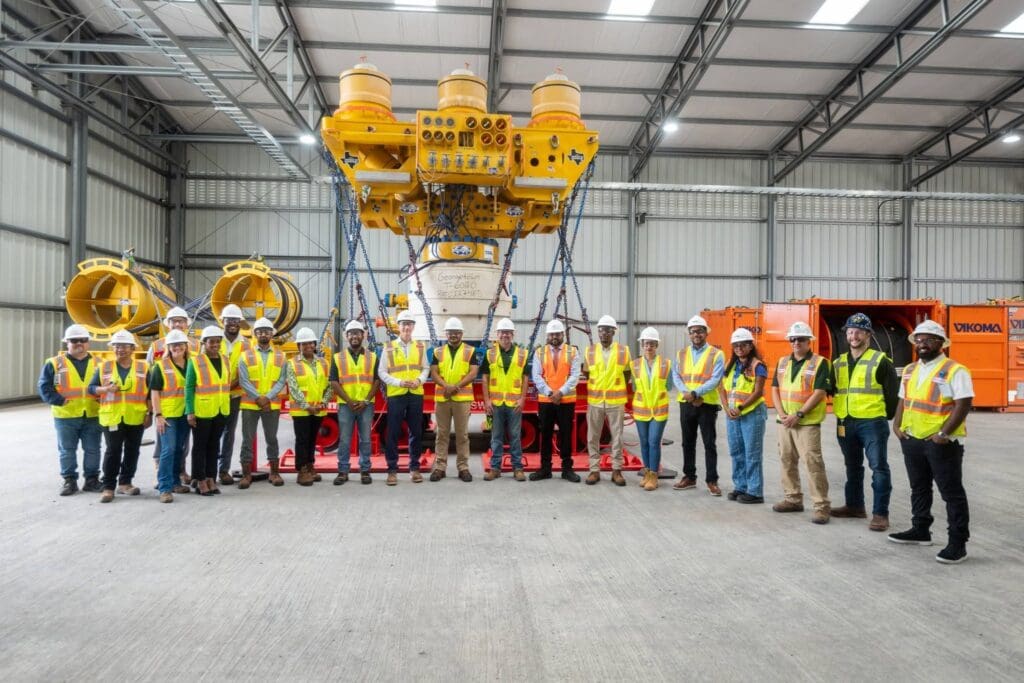
The visit also highlighted Guyana’s capping stack, an emergency piece of equipment used in offshore well control. The Ministry said the capping stack can be lowered to the seabed to lock a well and prevent or redirect the flow of oil or gas. It said there are only 13 capping stacks in the world, with two located in Latin America and the Caribbean: Brazil and Guyana.
The exercise comes as Guyana’s offshore oil industry continues to expand. OilNOW has reported that ExxonMobil and its co-venturers have rapidly scaled production in Guyana since first oil in 2019, with output now exceeding 900,000 barrels per day. Production in the Stabroek Block averaged about 914,000 barrels per day in the first quarter of 2026, supported by the Liza 1, Liza 2, Payara and Yellowtail developments.
OilNOW has also reported that offshore safety zones are becoming more relevant as activity increases in the Stabroek Block, where multiple floating production, storage and offloading vessels and subsea systems are in operation. These zones are used to protect oil and gas installations, workers, seafarers and marine users, and are communicated through Notices to Mariners issued by the Maritime Administration Department.
O&G companies playing major role in Guyana oil spill preparedness efforts – CDC | OilNOW
The broader offshore programme continues to grow, with ExxonMobil advancing work on major developments including Uaru and Whiptail. OilNOW recently reported that anchor handling and firefighting vessels are supporting deepwater development operations at those fields, underscoring the scale of marine activity tied to Guyana’s offshore expansion.
ExxonMobil operates the Stabroek Block with a 45% interest. Hess holds 30% and CNOOC holds 25%.
The Ministry said the June 16 exercise provided familiarization training for vessel support crews and emergency response teams that would be involved in equipment deployment during an incident.