


ExxonMobil Guyana has commissioned an industrial baseline study to assess Guyana’s workforce capacity and future labor demand as the oil and gas sector expands.
Its President, Alistair Routledge said the study will be completed later this year. He made the disclosure on Wednesday, June 17, 2026, at the handover ceremony for Letters of Approval for Local Content Plans at Roraima Duke Lodge, Kingston, Georgetown.
“It will help us with two things: an understanding of what is today’s baseline of workforce capacity, what can the education institutions deliver by way of additional training to raise the capability of that capacity,” he shared.
Routledge said the work is needed because Guyana must understand not only the labor needs of oil and gas, but also the demand coming from other sectors.
“That’s critical to understand, if we’re to avoid [the] Dutch disease,” he said. The baseline study comes as Guyana’s offshore oil industry continues to grow through the Stabroek Block developments. ExxonMobil is the operator of the block, where production began in December 2019 and has since expanded through multiple deepwater projects.
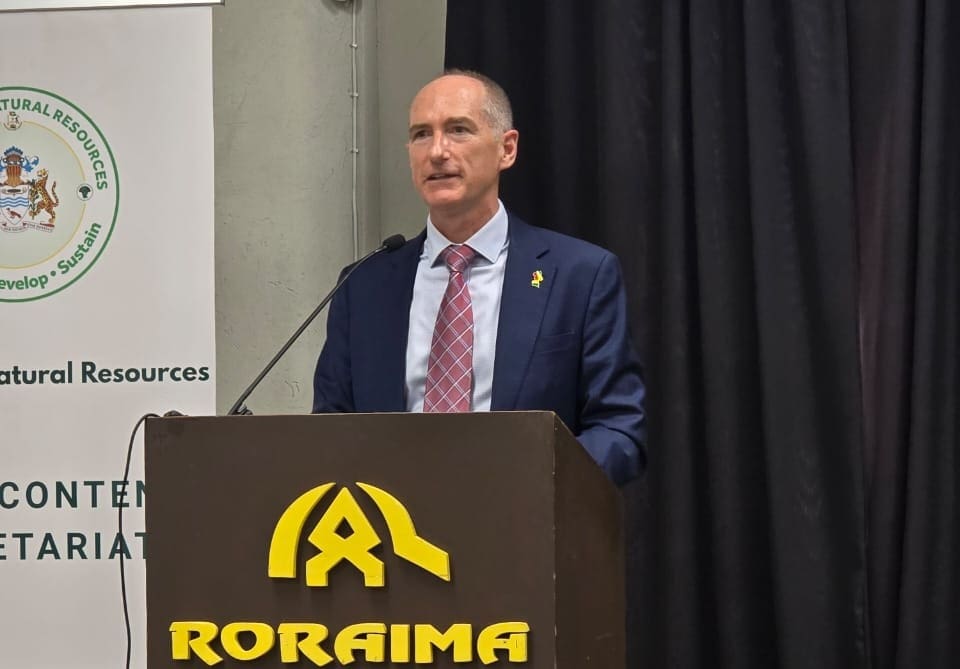
Routledge said the education sector will have to play a bigger role in Guyana’s local content development. He said the industry has made strong gains in hiring Guyanese workers, but companies are finding it harder to identify additional workers with the required technical skills.
He pointed to vocational and professional training as central to building capacity. He referenced institutions such as the Guyana Technical Training College Inc., the University of Guyana, technical and vocational education and training centers, and other local training bodies as important to meeting future labor needs.
Routledge said Guyana has made major progress since the Local Content Act was passed in December 2021. He said 68% of the industry’s direct workforce was Guyanese at the end of 2025.
He said that level of participation is significant for a country that had no offshore oil production base before the Stabroek Block developments. But he said the sector should not treat the gains as complete. “I think we should all look back with a sense of pride in the progress that has been made,” Routledge said. “But I always tell my team, also, we should never be complacent, that there is more to do.”
Routledge said collaboration has driven the gains made under Guyana’s local content framework. He said the law created the expectations, but implementation required continued work among the government, the Local Content Secretariat, international companies, and local suppliers.
He said the continued review of local content data, annual plan development, and engagement across the sector have helped move the process forward.
ExxonMobil Guyana operates the Stabroek Block offshore Guyana, where production began in 2019 after the Liza discovery. The company leads several deepwater developments with Hess and CNOOC, supporting investment, jobs, procurement, and local content growth.