

From record-setting production in Guyana to shifting energy fortunes in Trinidad and Tobago and a sharp turn in U.S.–Venezuela relations, 2025 was a year of heightened regional focus for the oil and gas sector.
OilNOW’s top stories of the year, selected based on readership, reflected strong public interest in exploration activity, gas developments, energy security and geopolitics, as developments in neighbouring Trinidad and Tobago and Venezuela increasingly shaped the wider energy landscape of the southern Caribbean.
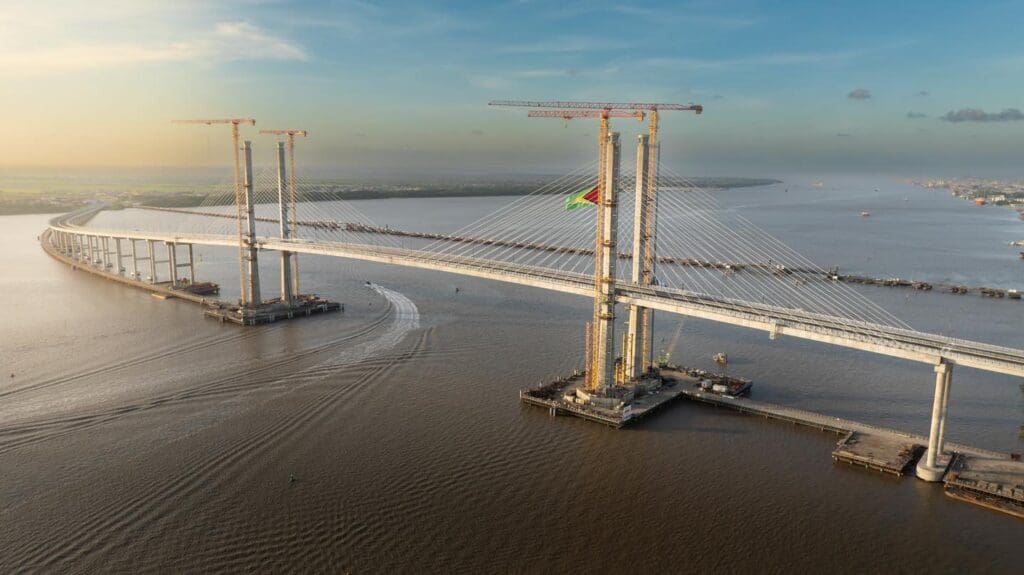
January: New Demerara bridge to be completed by August 31, 2025 – Government
Guyana actually ended up commissioning the bridge in October, naming it the Bharrat Jagdeo Demerara River Bridge, after the former President and current Vice President. The toll free bridge was a massive undertaking, symbolic of Guyana’s new economic trajectory. It is, however, more than just a big project. It does away with the congestion that often plagued the previous aged bridge, and boosts connectivity between two of Guyana’s most populous regions.
February: Guyana-Suriname Basin, Brazil among busiest regions this year for high-impact drill campaigns
The Guyana-Suriname Basin and Brazil were highlighted in February as key areas of interest for high-impact drilling in the Western Hemisphere’s oil and gas sector. With major new projects coming on stream in Guyana, Suriname and Brazil over the years, these countries are increasingly viewed as key drivers of global oil supply growth going into the 2030s, underscoring why high-impact drilling activity has remained concentrated in these basins.
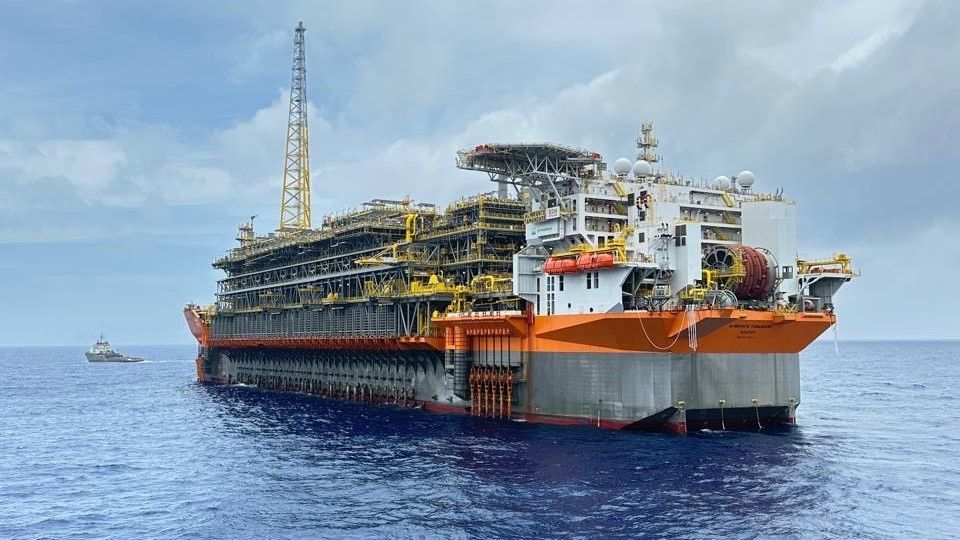
March: Venezuela received over US$1 million in oil payments plus confidential signing bonus for Dragon gas deal – Young (OilNOW’s most read article of 2025)
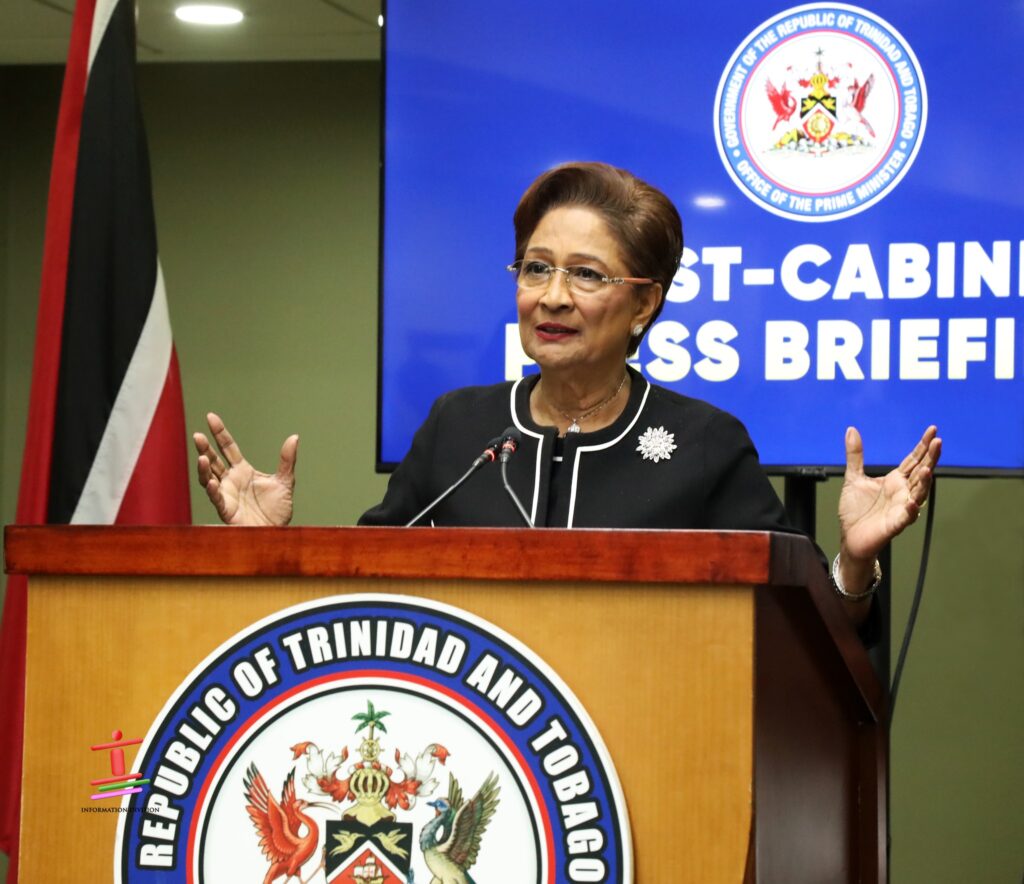
Venezuela had received over US$1 million in oil payments and a confidential signing bonus for a deal related to the Dragon gas project, according to then Energy Minister Stuart Young. However, following the change of administration in Trinidad and Tobago and the assumption of office by new Prime Minister Kamla Persad-Bissessar, relations deteriorated sharply. In December, Caracas terminated all agreements and negotiations for natural gas supply to Trinidad and Tobago, with Vice President Delcy Rodríguez citing “hostile acts” by the United States and accusing Port of Spain of supporting what Venezuela described as the theft of its oil amid tanker seizures by Washington.
April: Second gas project to power Guyana’s first AI data center
President Irfaan Ali had announced that there would be an artificial intelligence data center in Berbice which, based on information from a subsequent event, is envisioned at up to 2 gigawatts (GW). It is expected to be powered by offshore natural gas supplied by ExxonMobil Guyana, through a massive project that is still in its exploratory stages. Massive gas fields located near the border with Suriname could form the basis of a gas development that could produce gas to be piped to Berbice, powering not just the data center, but various onshore projects the Guyana government and Exxon have invited investors to contemplate.
A 100 GW data center is also being contemplated for Wales, through a memorandum of understanding (MoU) between Guyana and Cerebras Systems.

May: TT offshore auction largest ever in history – S&P
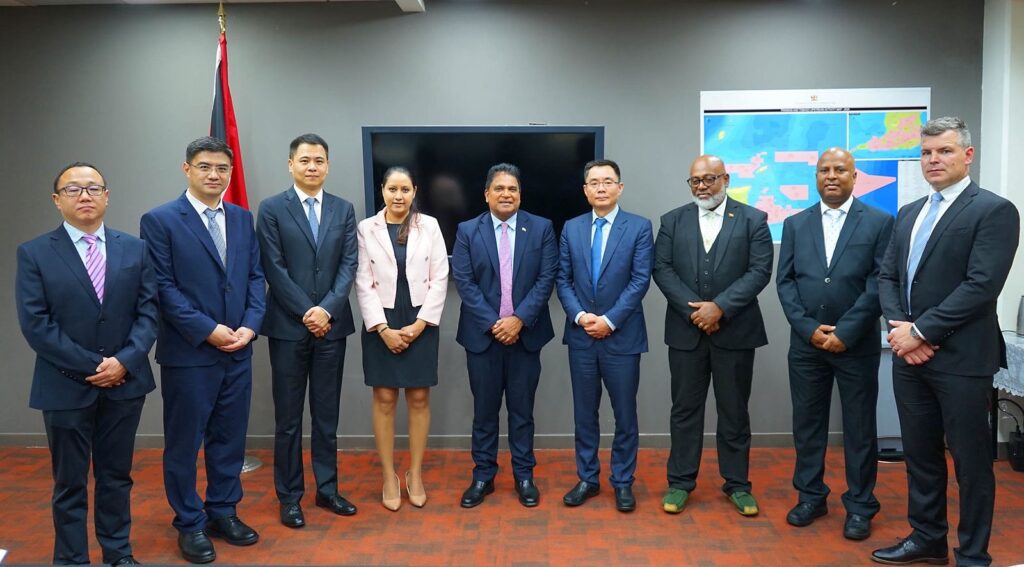
Trinidad and Tobago’s 2025 deepwater bid round — described by S&P Global as the largest offshore licensing opportunity ever offered by the country — closed in September after putting 26 blocks covering nearly 30,000 square kilometres on the market. While the Energy Ministry confirmed receiving four bids from two bidders, including three from CNOOC International Limited and one from a STIT Energy–GROUNDPORTS consortium, no awards had been announced by year-end, with the government indicating the bid evaluation process would extend beyond the close of the year.
June: Applications open for GTTCI Instructor roles to support offshore oil training
What began as a call for instructors to support offshore oil and gas training culminated by year-end with the completion of construction of the Guyana Technical Training College Incorporated (GTTCI), which President Irfaan Ali said is ready to deliver instruction. The Port Mourant campus houses lecture rooms, laboratories, workshops, administrative offices and the Facility Simulator (FacTor), supporting an 18-month advanced oil and gas diploma launched in October that blends classroom learning with hands-on and simulator-based training; FacTor itself was established in 2024 through an initiative led by SBM Offshore with support from the Stabroek Block consortium — ExxonMobil, Hess and CNOOC — and the Guyana government, positioning the institution as a key pillar in building industry-ready local capacity as Guyana’s oil sector expands.
July: U.S. appears to ease up on Venezuela with Chevron license renewal
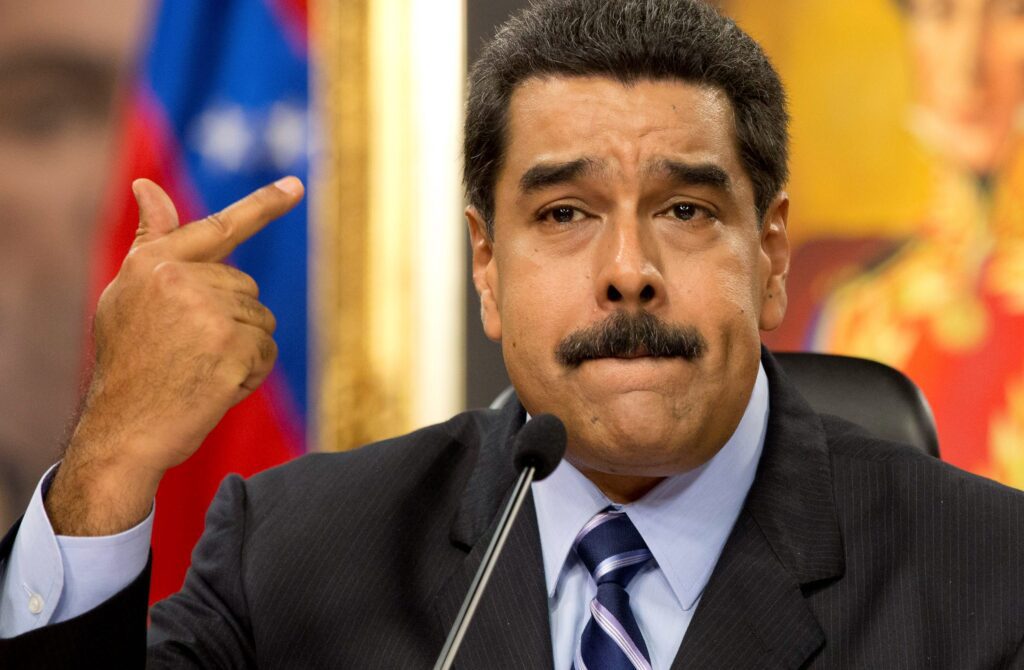
What appeared in July to be a softening of Washington’s stance toward Venezuela following the renewal of Chevron’s operating licence later gave way to a sharp escalation in U.S. pressure on President Nicolás Maduro’s government. By year-end, the Trump administration had expanded its military presence in the Caribbean, carried out maritime and aerial operations it said targeted drug trafficking, and seized tankers accused of transporting sanctioned Venezuelan oil, developments that Guyana and Trinidad and Tobago publicly supported amid heightened regional tensions.
August: Guyana gasoline prices now lowest in the region
Guyana recorded the lowest gasoline price in the Caribbean region in July, well below the global average, according to data shared by the Energy Chamber of Trinidad and Tobago in August. Guyanese motorists benefited from pump prices around US$0.81 per liter in July as global crude prices eased and government policies kept excise taxes at zero to support stable, affordable gasoline pricing.
September: Exxon can’t promise another Guyana: Ardill on Trinidad deepwater plans
ExxonMobil cautioned in September that Trinidad and Tobago’s deepwater acreage cannot be assumed to guarantee a replication of Guyana’s petroleum success, as the company returned to the country after more than two decades. The comments by ExxonMobil Vice President of Exploration John Ardill followed the award of the 7,765-square-kilometer TTUD-1 block in the eastern Tobago Basin, where Exxon said it would apply its full deepwater subsurface expertise and development capabilities to test the geology, framing the production sharing contract as a long-term, high-risk effort with the potential of transformational outcomes.
October: Trinidad’s Dragon gas deal is back, but with a twist
Trinidad and Tobago’s long-stalled Dragon gas project appeared to regain momentum in October after Reuters reported that the United States had issued a new, three-stage authorization allowing negotiations with Venezuela to resume under revised conditions. The approval permitted Trinidad and Shell to engage Venezuela and PDVSA through April 2026, while mandating the inclusion of U.S. companies in any development, but the revival proved short-lived, as Caracas in December terminated all gas agreements with Trinidad due to rising political and security tensions.
November: ExxonMobil could unlock $20 billion in Trinidad’s deepwater play – Rystad Energy
ExxonMobil’s entry into Trinidad and Tobago’s deepwater acreage was cast in November as a potentially transformative development after Rystad Energy said the company could unlock more than US$20 billion in new investment if exploration proves successful. Rystad noted Exxon’s intent to apply the exploration approach used offshore Guyana , where it estimates more than 13 billion barrels of recoverable resources. Success for Exxon in Trinidad would provide quite a boost for the country, which has been wrestling with years of declining gas production, and has seen the strain of the foundations of its economy, which is built on natural gas for power, industry, and exports.
December: Exxon eyes February start for Trinidad seismic survey, ministry says
ExxonMobil’s Trinidad deepwater program gathered further momentum in December after the Energy Ministry said the company could begin its seismic survey as early as February, accelerating its work plan for the ultra-deepwater block. The Ministry said ExxonMobil expects to fire the first seismic shot after selecting an acquisition contractor, marking a shift from earlier guidance that placed seismic activity in the second quarter of 2026, as both the company and the government moved to streamline approvals and minimise delays under the revised timeline.
Writers’ picks
Shikema Dey: Guyana secures title as world’s largest oil producer per capita
Guyana became the world’s largest per capita producer in 2025, with the start of production at Yellowtail. The fourth Stabroek Block project, with a design rate of 250,000 barrels per day (b/d), takes Guyana’s total output to about 900,000 b/d. Being the world’s largest oil producer per capita means the volume of oil produced, when divided by the number of citizens, exceeds that of every other oil-producing country. Guyana’s output now equates to more than one barrel per person per day, an extraordinary ratio that highlights the scale of offshore production relative to its population.
Işıl Güneş: Suriname and Guyana leaders commit to energy cooperation and Corentyne bridge advancement
In September, Presidents Mohamed Irfaan Ali of Guyana and Jennifer Geerlings-Simons of Suriname reaffirmed a broad agenda of bilateral cooperation that spanned energy security and cross-border infrastructure. At a summit in Nieuw Nickerie, the two leaders pledged closer collaboration in the oil and gas sector and committed to advancing joint ventures and investment opportunities, while also agreeing to coordinate on the long-anticipated Corentyne River Bridge project to enhance trade, tourism, connectivity and regional integration.
Kemol King: UPDATED: A guide to Guyana’s Gas-to-Energy project
The Gas-to-Energy project is a landmark energy venture that is expected to revolutionize electricity generation in Guyana, boosting capacity, slashing emissions, and reducing costs. The project, marred by delays, is expected to be completed in 2026. It is set to take Guyana closer to energy independence. This article guide is a must-read for anyone looking for a crash course on the Gas-to-Energy project.
Note: This article was originally published in December 2024 and has been continuously updated as the project progressed, most recently in November 2025.
Editor’s Pick
Delana Isles: Guyana’s local content spend hits US$350M in six months
Guyana’s local content framework delivered tangible results in 2025, with more than US$350 million spent with Guyanese companies in the first six months alone. The mid-year results indicate that local procurement is likely to reach or even surpass yearly goals, showing increased capability among local businesses and stricter application of the Local Content Act. Investments in training, scholarships and workforce development demonstrate a shift from participation to sustainability, as Guyanese businesses and professionals deepened their footprint across the oil and gas value chain.