


PARAMARIBO, SURINAME – Countries developing new offshore oil industries must ensure their citizens are active participants rather than passive observers, Guyana’s Natural Resources Minister Vickram Bharrat said on Wednesday, arguing that broad local participation is essential to managing public expectations and maximizing the benefits of petroleum wealth.
Speaking during a June 23 ministerial panel discussion at the Suriname Energy, Oil and Gas Summit (SEOGS) 2026, Bharrat said governments should prioritize getting local workers and businesses involved throughout the oil and gas value chain.
“You cannot be an oil-producing country where your people are spectators,” Bharrat said. “They’re standing and they’re seeing every single development in the oil and gas sector, but they’re not even involved in it. They’re not even producing the food that goes at the [floating production, storage and offloading vessels] FPSOs and the drill ships offshore in their own country.”
TotalEnergies sees more oil potential in Suriname’s Block 58 | OilNOW
According to Bharrat, meaningful local participation also helps governments manage rising public expectations as oil revenues grow.
He described balancing those expectations as one of the biggest challenges facing emerging oil-producing countries, noting that citizens get frequent reports about production levels and petroleum revenues while expecting to see corresponding improvements in their own lives.
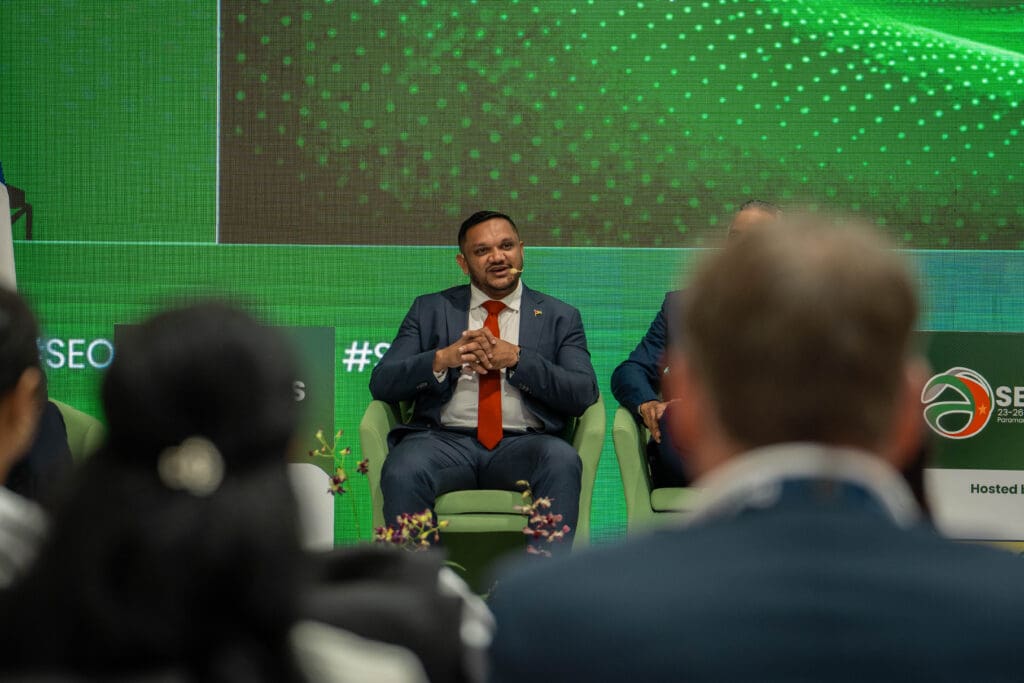
Bharrat said Guyana has sought to address that challenge by expanding opportunities for Guyanese workers and businesses in the sector.
He said about 7,000 Guyanese are directly employed in the oil and gas industry, with another 7,000 benefiting indirectly. In addition, roughly 2,000 local businesses now supply goods and services to the sector.
Petronas says investors now watching Suriname’s ability to deliver | OilNOW
“That is 7,000 families benefiting from this oil and gas sector,” he said. “We have 2,000 small Guyanese businesses that are involved in the provision of goods and services to the oil and gas sector.”
Bharrat argued that widespread participation allows more citizens to directly experience the benefits of petroleum development while easing pressure on governments to meet rapidly rising expectations.
“I think key to that fast-paced development is that it must be managed,” he said. “It must involve the local private sector and the involvement of our people.”
Suriname is preparing for first oil production from the GranMorgu offshore development operated by TotalEnergies, with production expected to begin in 2028. Local content has emerged as one of the country’s policy focuses as government and industry work to position Surinamese companies and workers to participate in the sector.