

A Trinidad and Tobago energy expert says a U.S. takeover of Venezuela could reopen the door for the stalled Dragon gas project and other cross-border developments critical to Trinidad’s gas supply.
Responding to questions from Trinidad Express Business this week, energy expert Anthony Paul said U.S. intervention, as publicly stated by President Donald Trump, could fast-track gas development in the Manatee/Loran and Manakin/Coquina cross-border fields.
“The sanctions regime made all of this unattractive to investors. The short-term US licence regime could not satisfy the investment criteria of smaller, independent operators who could go after the smaller fields,” Paul told the newspaper.
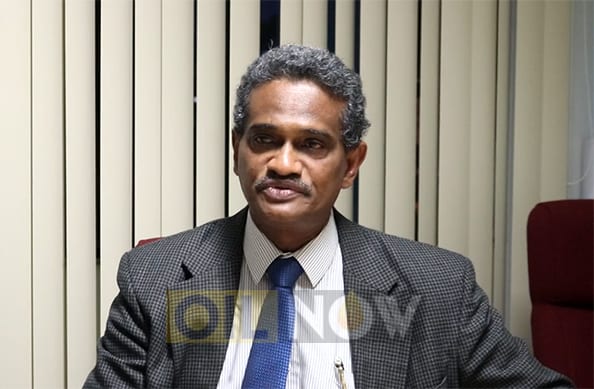
He explained that sanctions have discouraged investment across Venezuela’s oil and gas sector, including the Dragon field. Paul said any lifting of sanctions could change that dynamic.
“If there is a bright side to the intervention, there might be a lifting of the sanctions, as has happened in Syria, whereby the economic hardships faced by ordinary Venezuelans might be eased. This, of course, will be enhanced if there were internal security,” he said.
Paul said that Dragon is not the only opportunity.
“Together with Rio Caribe and Mejillones, there are over 13 tcf (trillion cubic feet) of proven reserves. There were historically Chinese and Russian interests in the development of these fields, but these have not progressed. The fate of Venezuela’s hydrocarbon relationships with these two countries is now less certain than before,” he said.
He also pointed to additional proven and high-potential resources across the Gulf of Paria, the Columbus Channel and shallow Atlantic waters near Trinidad.
“By overcoming the legal and contractual hurdles needed for Dragon’s development and monetization in Trinidad, we would have opened up these other fields for follow-up, bringing more gas ashore and longer-term life to the plants in Point Lisas and Point Fortin, the local services companies and young technicians, engineers and geoscientists,” Paul said.
Paul’s comments follow U.S. military strikes on January 3 and the capture of Venezuelan President Nicolás Maduro and his wife, events that have reshaped regional energy and security calculations.
The Dragon project has faced repeated setbacks. On April 8, the U.S. government revoked licenses previously granted to Trinidad and Tobago for the Dragon and Manakin-Cocuina cross-border gas fields. The licenses, issued by the Treasury’s Office of Foreign Assets Control, were originally approved in October and December 2023.
The revocation followed earlier uncertainty under the Trump administration. However, in October, Trinidad and Tobago’s Attorney General John Jeremie announced that the country had received an OFAC license to again pursue Dragon.
Momentum stalled again in December when Venezuela terminated all contracts and negotiations to supply natural gas to Trinidad and Tobago. Venezuelan Vice President Delcy Rodríguez cited alleged hostile actions by the United States and accused Trinidad and Tobago of facilitating those actions.
President Maduro subsequently denounced the bilateral Framework Agreement on Energy Cooperation, halting all current and future gas arrangements, despite recent talks aimed at supporting Trinidad’s LNG and petrochemical sectors.