


A signing bonus of US$17 million will be paid to Guyana for the S7 Block, awarded to Ghana’s Cybele Energy Ltd, exceeding the ceiling set for shallow-water assets by US$7 million.
This detail was shared today as the company’s Chief Executive Officer (CEO) Beatrice Mensah‑Tayui signed a new Petroleum Exploration License (PEL) with the Government of Guyana.
Ghanian Cybele Energy Ltd. estimates Guyana’s shallow S7 Block holds a “conservative estimate” of 400 million barrels of recoverable oil. Block S7, according to information from Cybele, is located 50 kilometres from ExxonMobil’s Liza 1 & 2 fields with an oil fairway that runs towards Guyana’s neighbor, Suriname.
Cybele is the first African-led operator in Guyana and the first woman-led Exploration and Production company to secure a Block outside of Africa.
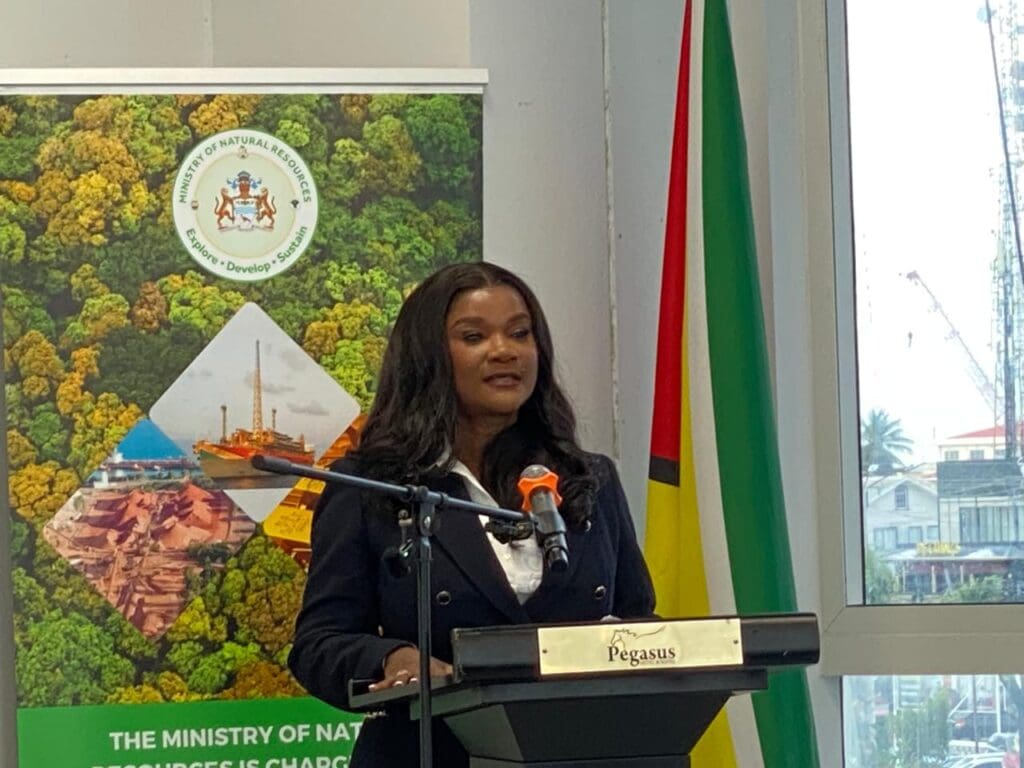
“This has been one of the most seamless processes we’ve been through,” the Cybele CEO shared, crediting the team at the Ministry of Natural Resources.
Mensah‑Tayui said that her company’s vision for Block S7 is “robust”.
“S7 provides a lot of opportunities for us,” she added. “The vision is to uphold safety and to respect the environment that has been gifted to us. We will make sure we do right by Guyana.”
This is the second PEL signing for Guyana’s first auction.
Guyana’s Minister of Natural Resources, Vickram Bharrat, said that the event is indicative of the country’s presence on the global stage.
“It shows that our work…has been truly recognized around the world, so much so that it is attracting investments and interests globally and across continents,” he added.
The signing also brings with it opportunities for the local private sector, which translates to even more benefits for Guyanese.
“The future looks bright for Guyana and Guyana’s partners,” he said.
This PEL and petroleum agreement is also the second signed under the Guyana government’s new fiscal regime. It entails a 10% royalty rate, a 10% corporate tax and a lowered cost recovery ceiling, while profit sharing remains a 50/50 split between the government and contractors. These terms differ from the widely criticized Stabroek Block Petroleum Sharing Agreement (PSA).